Dear Dana, never book a heavyweight main event ever again…

UFC Fight Night: Rozenstruik vs. Almeida was going fine. Morono won the absolute lay-up he had been given for his endless boot licking he has been doing for Dana White and the UFC. A couple of KOs from two up and commers, one more Irish than the other. Then, the name value, the big draw… Except they forgot they were meant to be the main draw.

Let’s begin with arguably the main offenders. The saddest thing about the Walker/Smith fight is that someone had to win it. Walker darted in and out for about 3 minutes before coming straight down off his toes and proceeded to spend the next 12 minutes stood flat footed in front of an Anthony Smith who refused to throw strikes. Walker at least added to his highlight package of throwing three flashy techniques in a row without hitting a single one. Indeed the quality of the fight can be best summarised by Anthony Smith accidentally ducking a hook kick and looking so surprised he nearly went down anyway.

The true annoyance of this fight however is the fact that these two were in what is essentially a title eliminator depending on the health of Jiri. This fight was so dull it has single-handedly changed my opinion on whether Alex Pereira should stay at middle weight or come up. Watching Walker and Smith mount such ineffectual offense has me, and likely the UFC as well, thinking about the potential matchup between ‘Stone Hands’ and Procházka. 

The only way to make this a helpful inclusion this high on a card is by putting Jamahal Hill up against Walker and immediately precede it with the matchup between the Brazilian and the Pole. That way we can potentially breathe some life into what is arguably the least exciting division in the sport. A pre made number 1 contender fight that can give us a sense of finality considering the tail spin the division has been in since Jon Jones vacated.

Speaking of Jones, the heavyweights. There is no talent in this division. No one watched Almeida dive tackle Rozenstruik round the ankles then progress with free will to a choke and thought, my god he is incredible. Or rather a lot of people did because the heavy weight division is so devoid of talent. The positive response honestly surprised me. Considering the man at the top of the division it is difficult to imagine anyone having success further than beating each other in the middling contender bracket. 

The bookings the UFC are making on the basis of weight class is no longer viable. The volume of talent in the lower weight classes is simply too much to prioritise the two worst divisions in MMA. Ian Garry, whilst far from a complete project is a popular figure and a number of people will have been unaware he was fighting on this card. Whilst more established names were ahead of him on the billing. I doubt that the card performed better than if a figure like Garry were to have led the card. Considering how easily the rankings move around there is no reason you could not move Garry into the 15 slot and have that be a justification for his top billing.

Dana, you know that these guys are not good, you lost Ngannou, and soon you’ll lose any competition for Jones. Do you really think Sergei Pavlovich is going to beat him? Almeida? No of course you don’t otherwise you would not be trying to drag Stipe kicking and screaming back into the Octagon. So lets not headline events with these guys anymore. Put them as the opener or even that featured prelim thing you have been doing. It will bring more eyes to the cards as wholes and will help promote those guys at the top of the card who actually have the talent you market these heavyweights as having.

Sincerely,

A Bantamweight fan.

Are we scared to take fantasy seriously? 

Game of thrones and the issue with fantasy television.

Yes, this is a veiled discussion of season 8 of game of thrones. Yes it will include criticism of Benioff and Weiss, and yes it will lament at the sheer shame of the finale.  Why you ask? Because it represents a theme that has plagued fantasy adaptation before and after the production of Game of Thrones. With the changing of the guard occurring at Netflix around the Witcher, reportedly due to Henry Cavil disputing the studio’s less than accurate approach to adaptation. There has not been a better time to take a closer look at the issue of fantasy adaptation. 

“Fantasy is a natural human activity. It certainly does not destroy or even insult reason,” Tolkien writing in 1939 struck upon an idea that still haunts the world of fantasy today.

Game of Thrones success was built upon its realism and its adult themes. It ran against the popular representation of fantasy in the main stream. Fantasy in the widest of public eyes before Game of Thrones was, directly or indirectly, exclusively informed by a cursory knowledge of Tolkien.  It seems a bold claim but Tolkien’s Lord of the Rings and The Hobbit particularly formed the bedrock for much of the fantasy of the 20thcentury and its perceptions. The result? Fantasy became whimsical, it became hobbits, Gandalf smoking a pipe and magical rings. Sexless fairy tales to be read at bed time. It took Game of Thrones about sixty minutes to change that in the public eye. S1 E1 Winter is coming has two beheadings, one by a creature ripped from a horror story and one by our ostensibly main character. It has prostitutes, incest and attempted child murder. What else could you want? Well people wanted a lot more. The popularity of Game of Thrones supposedly changed the way we approach fantasy, it can have explicit sex and violence and of course anyone could die. This was what Tolkien meant in his 1939 essay, perhaps in a less excessive way, but Tolkien held firmly to the belief that fantasy was an adult genre, not just for bedtime stories.

So fast forward eight seasons of slowly declining television. The audience was left feeling empty as characters abandoned their complex storylines and survived dangers that would and had killed characters from early seasons. The end of the long night and the battle for the iron throne disappointed. There are a myriad of reasons. Importantly one one excuse that was not present was a lack of budget. From all the discussion pre and post the release of season eight of the show, there appears to have been an essentially limitless budget, for practical purposes at the very least. Miguel Sopochnik, the most reliable of the returning episode directors responsible for the greatest battle scenes in the series and now the show runner for the upcoming House of the Dragon, talked regularly about the missed opportunities in The Long Night. The resistance appears to have been from the writing duo. 

Now a number of critics and reviewers have criticised David Benioff and Dan Weiss for a variety of reasons. However most of these are specific to the duo and to game of thrones, and here we diverge, for all of the shortcomings of Benioff and Weiss they have taken the brunt of the criticism for what is a much more widespread issue within the world of television and film. Writer’s and studio executives seem unable to take fantasy seriously. 

The only legitimately faultless example of translating fantasy from page to screen is Peter Jackson’s Lord of the Rings trilogy. Key to its success was the detail Jackson put into bringing Tolkien’s vision into the world of film as faithfully as he could. Importantly the most fantastical elements were approached with relish. Golem, a character ripe for alteration or misrepresentation, was instead the focus of an entirely new type of acting, one that turned Andy Serkis into a household name. Similarly, the army of the dead from Dunharrow, the Balrog, even Orcs, were treated with a respect we don’t see in other fantasy media. Game of thrones exemplified this, the lack of inclusion of elements like Lady Stoneheart and Nymeria’s pack, the butchering of Bran’s storyline and the clear lack of understanding of how to marry the fantasy to the real world elements stank of a writer’s room unable to buy into the fantasy. 

Perhaps the most frustrating part of this is that recently we have seen fantasy concepts succeed when they are approached with full confidence. Spiderman: Far From Home the premise of which is built upon the wacky and wonderful marvel multiverse grossed $1.9 Billion. This sum is frankly obscene. When looking at the rest of Marvel’s lack lustre showing in phase 4, we can pick out the successes and see a consistent theme. The two properties that were met with the best critical success were Loki, and the recent Guardians of the Galaxy Vol.3. The two of these wholeheartedly embraced the unique aspects of their settings. We saw a crocodile Loki and a romance between alternate versions of our traditional Loki. Guardian’s hardest hitting moment was the death a cybernetic otter, a walrus called Teefs and a spider-rabbit called Floor. People cried in the cinema. Why? Because the story was treated with the utmost seriousness. The ridiculous elements of the world were treated with an adult approach and the result was an outstanding piece of media. James Gunn was able to stamp his style on the film and made it an outstanding success. Comparably Sam Raimi was limited by the studio reportedly and the result was Multiverse of Madness did not live up to the potential it carried. Here then we can see emphasised the difference that treating the content seriously makes. Again the through line is the artists involved approach the material with respect and with an aim to bring the crazy ideas to life. 

For all the attempts to create fantasy shows in the wake of the success of Game of Thrones, based upon successful IP like Wheel of TimeShannara Chronicles even Halo, none have succeeded. They all suffer from the same issues: limited budget, acting on a scale from cheesy to outright awful, and lacklustre story and character. These issues stem from a systemic lack of confidence in the source material, from studio head to lowly extra. It is here perhaps there is hope. House of the Dragon’s first season did what Game of Thrones could not and embrace the more fantastical elements. Miguel Sopochnik has talked about faithfulness to the source material since he was directing in early seasons of Game of Thrones and as showrunner he has a chance to continue to right some wrongs. Perhaps if House of the dragon succeeds further we may see a change in the winds of fantasy, a shift toward the fantastic. Maybe the dance of dragons and Matt Smith in a white wig can bring us all to appreciate that: “If a fairy story as a kind is worth reading at all it is worthy to be written for and read by adults.” – J.R.R. Tolkien.

The Toughest Selection in World Rugby?

Selection has and likely always will be the most contentious issue in any sport at any level. When it comes to the international stage, the level of debate is at its zenith. Pubs across the land are provided with endless background noise, as we debate the pros and cons of our favourites. Whenever a Six Nations or a Rugby Championship rolls around, we agonise over every position. We are inevitably disappointed when our favourite club player does not make his debut, despite the 1000-1 odds. There is one position, however, that this year will cause more debates than any other. The wing spot has been a focal point of selection for a long time in New Zealand, after Jonah Lomu made it the most iconic jersey in Rugby history. This year it is England’s turn to agonise over the wings.

The talent produced by the premiership over the last few years has created a wealth of available options for new coach Steve Borthwick. There is so much talent, young and old, that it will be almost impossible for Borthwick to select the best options. It will definitely be impossible to please everyone. 

The debate should begin with the incumbent. Johnny May is the only player with any consistent involvement with the side recently. Often we can be a prisoner of the moment, buying into the new hot prospect and ignoring old talent for simply because we are used to it. This is not one of those cases. May has lost a step both in his general play and more simply in his pace. He is no longer the number 11 who can turn on the afterburners and skin defenders on the outside. At international level this rift is clear, wing is a young man’s position, and at 32 years of age, May is likely over the hill. However the magic he has produced in the past, along with his veterancy, might make him a valuable squad member to help ease the transition between coaches. This sort of role should be left to the traditional leaders in the team however. With the volume of talent coming through the ranks, keeping May in the team is not available option. 

So now to the young bucks. Here we enter the meat of the debate. Who is the front-runner? On recency, the obvious place to start is Cadan Murley. The bowling ball in Quins quarters has been exceptional this season. He brings a marauding physical style to the game that England may well need if Tuilagi does not return fully to the national set up as many predict.  His defense is outstanding, regularly being assigned the role of tackling the forward carrier off lineouts, halting opposition momentum. None of this physicality comes at the cost of finishing ability. The chemistry between Murley and Smith could be valuable if England decide to adopt a more attacking framework in the lead up to the world cup. 

A short jaunt along the North Circular from Twickenham to Brentford, from a physical specialist, to the best all-rounder in English rugby. Olli Hassel-Collins has timed his rise to prominence impeccably. Tied with Murley at 8 tries, Hassel-Collins tops the premiership scoring leader board. At 6’2” and 100kg, he is a deceptively large prospect to tackle and has genuine pace to burn. Whilst not considered a speedster, he is undoubtedly up there and has the ability to run away from the opposition. His frame allows him excellent ability in the air, something that will undoubtedly be valuable at international level. His defence is perhaps not what it could be, but he is far from a liability. For Borthwick he is perhaps the most complete package available. The only barrier to his selection is Tommy Freeman’s success in the national side. Hassel-Collins is Freeman with a higher upside and better physical attributes, but he may not get a look in with Freeman’s international quality already proved.

Amongst the explosion of talent across the premiership a couple names have been lost in the shuffle. The first is at the other end of the country. Adam Radwan. The appeal? Pace, sheer, unadulterated, pace. Radwan is the man that most would have money on as the fastest English rugby player. To go with this pace, a dynamic first step that seems almost impossible for defenders to track. This skill set gives him the best counterattacking game of any player in England at the moment and it is the sword that he will live and die by. If Borthwick wants to counterattack with flair, he need look no further, but it is likely he will go for a player more suited to traditional international rugby. 

The second of the forgotten gems? Joe Cokanasiga. Full disclosure, this writer loves Joe Cokanasiga. The gigantic winner has been up and down for bath it is true. But there are some days when the Jonah Lomu clone is simply unstoppable. His high ball work leaves something to be desired. You would not be able to select another limited weapon on the other wing as a result. But the danger presented by his personal cocktail of athleticism, strength, and speed, is simply game breaking at points. He has the ability to bring a bite to the English backline, filling a similar role to that which Van de Merwe fills for Scotland. Cokanasiga has also, despite intermittent playing time, shown he can do it at the international level. He is yet to have a game for England where he does not look like one of the most dangerous men on the pitch and Borthwick will ignore his talent at his own peril. 

With all these options, who else could stand a chance at selection? Well, there is the small matter of the wonderkid. Henry Arundel lit the European stage and then the international one alight. Arundel thrived in the England under 20s and has continued that form into his professional career. Arundel is perhaps best at 15, but with Freddie Steward chasing down the best player in the world title, it seems unlikely that Arundel will dethrone him at 15. His chance to slot into the team is definitely on the wing then. He offers the ace and finishing ability, with the aerial nous of a Hassel-Collins… so far. ‘Hype train’ is a term that seems almost designed for Arundel. What remains to be seen is if he is able to put together a significant run of form uninterrupted. Injury has obviously put a question mark over his selection as well as more importantly his development. Until he is able to put together a healthy set of games, demonstrating that the flashes of talent are more than just that, this writer will stick to more known quantities.

Who will Borthwick pick then? This writer’s mind is made up. Murley and Cokanasiga will bring a bite to an England attack sorely lacking weapons. But Borthwick’s selection may well be different. Any number of combinations may make an appearance. May is more likely to stick around than any pundit wants to see. It would also be unsurprising to see a call up for the likes of Potter from Leicester considering the coaching connection. Amongst the options available to him, I believe that Borthwick will have the sense to build around his full-back’s skill set and pick a speedster like Radwan, if fit, and an all-rounder in Hassel-Collins. Cue him picking May and Nowell.

“Use it 9!”

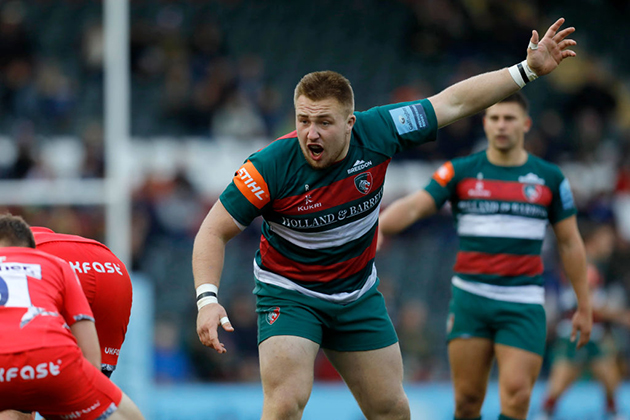
These word echoed through Franklin’s gardens at least fifty times today. The new world rugby law came in with a bang. Luke Pearce marshalled a dynamic Saints victory, but will the new rules help or harm the game?

Luke Pearce’s refereeing performance was almost solely focussed on the speed of the game. “Outstanding!” twitter users will cry. However it took barely 20 minutes for the drawbacks of the new style to rear their heads. The first scrum of the game saw Pearce hurry them the forwards to set at what was a visibly uncomfortable speed for them. Matavesi, one of the most underrated players in the world, had until this point been throwing himself around with abandon. He hurried to set himself up in the front row. His props scrambled to bind properly and Matavesi rushed to set his break foot. The Saints front row took an immediate nosedive straight to the turf as the scrum was set, and Matavesi came up limping, leaving the field straight after. Now whether this can be blamed entirely on the way that Pearce refereed the scrum is impossible to say. However demanding that front rows forgo the short bouts of recovery scrums used to offer, likely contributed to this injury and will definitely create more in the future. 

Some may be unconvinced by a single scrum injury. Even the most vehement defenders of the new rules however, will struggle with the issues presented in managing head injuries. The rules around the immediate stopping of the game when a head injury is identified remain in force. Pearce’s focus was on the speeding up of the ruck. His attention was forced by the new rules to focus on the ruck, not allowing him time to assess the wider situation. Charlie Matthews was downed to a spectacular broken nose, a clear HIA (Head Injury Assessment) situation. Pearce, however, was deeply involved in keeping the game moving at the new desired pace. Quins, as a result, were forced to defend a man down when the game should have been stopped. Considering that long stints of defense tore an already unrested Harlequins team apart, this is not insignificant.

There was an even more egregious incident however. Charlie Mathews was at least able to get off the pitch. Finn Smith, after a clear head knock that sent the physio charging onto the field, was forced to continue by the pace of the game. Pearce saw the situation and elected to play on regardless clearly aiming to keep the games pace up. The whole situation took a turn, when at the start of the second half it was revealed that Smith had failed a HIA in the changing room. So, Finn Smith spent twenty minutes playing concussed because the new rules meant Pearce was too invested in keeping the speed of the game high. 

Of course these injuries were not the only issues. A number of smaller decisions were missed on both sides. Scrappy breakdown play led to a number of ‘let God sort it out’ exchanges of knock ons. Regular inconsistency at the breakdown led to confusion among both sets of players and notably saw a softening on not rolling away. The speed of the game meant the TMO had less time to intervene. He contributed more as the game slowed down. Most of his involvements coming in the final fifteen as the aerobic demands became simply too high on players and referee alike.

Essentially the first game under the new rules has presented World Rugby with a dilemma. Which party line will they abandon? Will they commit to this fast speed of play, at the cost of player safety, and the time for officials to make the correct decisions? Or will they move past this obsession with speeding up a game, that is fundamentally methodical in pace? This writer knows which option he would choose…

The Return of the Big Boy at 12. 

Inside centre was once the domain of the big man, the back rower who had lucked his way into the backs at an early age and never looked back. He was always less of a link man and more of a walking brick to be hurled mercilessly at the opposition Fly-half. In recent years the position has taken somewhat of a turn, Farrell and Ford for England particularly changing the dynamic between 1st and 2nd receiver. The age of the two distributors began with them, and ironically, looks to be ending with them. 

So who is leading this bulldozering return? Well like a great deal of other things in the world of rugby at the moment its South Africa. Whilst the obvious front runner in this trend is the man who plays in Munster red in Damian de Allende, the real revolution is happening this side of the Irish Sea. In west London a somewhat disgraced former springbok is leading the charge in the inside centre renaissance. For all the great players who have emerged in the last three years at Harlequins, André Esterhuizen might just be the best of them. It has taken consecutive man of the match performances against Saints and Gloucester for the premiership viewers to take proper notice, but now he has English rugby’s full attention. 

To describe Harlequins first phase attack as a little one note would be underselling it, much like all roads and Rome, all set pieces lead to André. If the premiership kept a readily available metres after contact statistic Esterhuizen would be not only leading it, but he would likely have double his closest competitor. Put simply Esterhuizen is at the moment what the prime versions of Lomu, Vunipola and Tuilagi were, utterly impossible to tackle one on one. Teams now are regularly assigning the back lineout marker, alongside the standard ten/twelve two man tackle. This takes away what it is normally a back-rower a shot at the breakdown, not only does this stop a risk of turnover it ensures the ball is recycled quickly to allow Smith the use of his near uniquely dangerous outside backs to their best effect. One look at the first half try at Gloucester shows just how potent this combination can be. 

We know all this though, a big centre gets go forward and helps to expose the edges of a defense. So what makes it an inside centre renaissance, why are the big strong carrying twelves getting the looks they haven’t gotten over the last few years. You need only look at Mark Atkinson’s use of the boot, Esterhuizen world class ability over the ball at breakdown time and De Allende’s sublime handling. We are moving into an era, fuelled by the ever professionalising game, where elite size no longer means a lack of elite skill. A change in mentality around development and selection has swept through rugby in the last five to ten years. Size is no longer enough to make a decent player and as a result the centres coming through now with elite size, also have the skills to accompany it. 

It is this stigma against the big man as an unskilled luddite that is the key to this revolution in the midfield. The Ford Farrell axis era emerged from a concern about beating more complete defences than a binary blitz and drift, and getting as many playmakers on the field at the time. Big carrying twelves like Brad Barritt at the time could not fulfil those roles and so they were sidelined, the thinking being that a big twelve did not have the skills to provide more than one option. Now this mentality has begun to change it will only gain momentum. Esterhuizen is the figurehead right now but there are a number of others coming through in a big way in the sport. A South African counterpart making his money like so many in the North of England, Janse Van Rensburg at Sale is running damaging lines that are slowly establishing him as a starting twelve. He too offers work at the breakdown and defensive awareness that make him more valuable than your average brick. Atkinson is earning plaudits in a Gloucester team that has quietly become top four worthy for his carrying but also for his attacking kicking game. De Allende of course is leading the international charge acting as the embodiment of their physical play. The emergence of Marcus Smith may just force England’s selection hand in future putting a big body in the midfield to give him a reliable outlet under pressure as he has at Harlequins. 

Will it last? Is it a trend like always kicking for the corner like Exeter in their double champion years or Saracens anti-caterpillar techniques? Hopefully it will last. From the perspective of a fan and player watching André Esterhuizen run over players with all the effectiveness of an Afrikaans speaking lorry is reminiscent of why I began watching and then playing rugby in the first place. Rugby  is a uniquely physical sport and the big inside centre is the ultimate embodiment of this physicality. I for one hope it continues, watching André run over first phase defenders at the Stoop has brought more joy than Marcus’s goose-stepping or the ageless play of Danny Care. De Allende doing similarly in the world theatre is helping to open the door for future bulldozers with pianist’s hands and a violence in carrying that will make people fall in love with the game all over again.

So Can Harlequins do the Unthinkable Again?

A month ago, something very strange happened. Louis Lynagh got outside Tom O’Flaherty and scored in the corner at Twickenham. Smith drilled the hardest conversion of his career and took quins to 40 points, enough to win the premiership final. In the dark months of September through to early January, Harlequins looked aimless. Resigned to the lower end of the table they had become so comfortable in over the last few seasons. Suggestions from Rugby Pass were that it was a player revolt that saw Gustard’s exit in January. Whilst pure conjecture, the nature of the team after their momentous Premiership win, the togetherness of the squad seems to support the rumours. Harlequins as a group of players, then banded together and dragged themselves to a narrow fourth in the league, to get themselves into the tournament. A position the could not have reached under Gustard. Danny Care described the team as “so fourth,” prior to the semi-final with Bristol, emphasising the level of underdog that Harlequins were. So now can they do it again? Can they come close? If they do, how? 

In the words of DJ Khaled Harlequins next year may find themselves suffering from success. Smith’s call up to England and then the Lions shows he is considered to be in the world class bracket. Thus he may well be spending a large portion of future seasons in the white rather than the quarters. 

This is not just the case for Smith. Kenningham, Dombrandt, Evans, Marchant and even the newly acquired Huw Jones may find themselves called to international duty over the season. With others also being lost to national squads Quins will likely be fielding an understrength side in an uncomfortable number of games this season. 

Billy Millard and the management team however have clearly anticipated this. The out of favour Italian Fly-half Thomas Allen has been brought in to bolster the ten spot. Huw jones, similarly not appearing regularly in his own national set up at the moment has been brought in to help share the load with a Marchant primed for England success. Nick David provides ample cover in the back three and a nice hooker battle is forming between England U20 Sam Riley and Bath import Jack Walker.

Success has also put Harlequins in an unfamiliar place, being a legitimate European threat. Whilst they won the challenge cup in the 2010-11 season they have never been a player on the European stage in the way they could be this year. Balancing the two competitions will be a headache for the management team. However with the draw putting them up against Castres and Cardiff, fairly favourable options, they should be looking to really threaten in the champions cup as well as the premiership. 

A common criticism of Harlequins was that the victory was a flash in the pan, because their style of play cannot guarantee consistency. This season showed it clearly can, but next season Harlequins must confirm it. One of the concerns Harlequins will have this season however, is that with such a strong playing identity teams will be better prepared to take them on. It seems a compelling theory. Except that the teams that many thought would be able to install game plans that would restrict quins attack, the likes of Chiefs, Tigers and Bristol were drawn into the shootouts Harlequins thrive in. The inherent unpredictability of the quins system will also help keep teams off balance despite having a half season of experience against it.

A team that are yet to have any experience against this new Harlequins side is Saracens. The return of the London side will present a serious obstacle to every club, but particularly the top four. Make no mistake, Saracens will threaten the number one spot not the number four spot. They have a pretty good claim to be favourite this season despite their time in the championship. Whilst some players’ form did suffer, having arguably the best player in the world in Maro Itoje, and the wealth of other talent available to them they will be a serious force in their return season. 

Danny Care is the most dangerous scrum-half to have played in the professional era. There, I said it. By no means does that make him the best, that accolade goes comfortably to the 100 cap man Aaron Smith. In terms of having the ability to break a game open, there is no one better than the ageing Harlequins legend. With another England call up seeming unlikely, Care will be integral to Harlequins season. If they can get 20 odd games from DC Harlequins will more likely than not, be toward the top of the table, he is that valuable to the way they play. 

On the subject of players being valuable to the way Harlequins play. Allen and Jones amongst some other new signings, have a chance to slot in wonderfully with the Harlequins way. Allen is an attacking minded fly-half with a notably reliable boot from hand. Perhaps not the elite level threat with the ball in hand like Marcus Smith. He is however an effective distributor, who most importantly, takes he ball to the line regularly. A feature that will combine well with Huw Jones. The Flying Scotsman’s best performances have come when taking the ball from an elite, on the gain line distributor, in Finn Russell. His link with half backs could be a major threat for quins this year, especially when you consider the success that lower ceiling players like Luke Northmore have had there.

So then. Can they do it? In short, Yes. The style of play that Harlequins employed over the second half of last season showed itself to be effective against both top four and mid to low table teams. Harlequins appear to have bought back into this identity and if they continue to play the way they have shown they can, they have a real chance of being a major threat to the title. Their style of play will be particularly dangerous in the knockout element of the competition as was proved this year. They might find it more difficult to get into the top four, than to win a semi-final and final. So here’s to hoping that Harlequins can manage to rustle something up once again. After a Lions tour that was considered a bad advert for the game, there can be nothing better than some champagne joué from the men from Twickenham. 

England and a new Era?

With Autumn internationals announced, it is time to look toward a return to international rugby. After the Lions tour is decided, over October and November, the rugby world will begin to take shape ahead of the 2023 world cup. A premiership season of the highest calibre, combined with an interesting pair of summer internationals, has left the English team with a variety of options and opportunities. The potential for personnel changes is almost limitless. So how much will Jones change? Which players will he cling on to and which will he, or should he, put out to pasture?

Freddie Steward

The man behind much of Leicester’s resurgence over recent months. Steward is no longer a full back prospect for the future, but a fully-fledged player for the here and now. Competition over the 15 shirt between him and Max Malins will be stiff, but Steward has the stature and ability under the highball to make him a truly world class player. He plays with a maturity that has been fostered under the group of old heads at Leicester. There is a smoothness to his play that few can match, and having such a classy operator at the back of the team could be a real boon in 2023. 

Max Malins

The back three has a rich future in England and none emphasise this more than Max Malins. His time with Bristol has shown just how great an attacking threat he can be. His recent stint with England showed his quality as a defensive player and operator in the kicking game. With players like Malins and Steward inevitably competing for a single shirt, it could come down to form at the time. Having these two available however will sure up a position that has been a problem for England since the departure of Mike Brown.

Joe Cokanasiga

With 11 caps under his belt already, he’s not really the new kid on the block, but he simply must be in the autumn international squad. Whether that requires resting players like Watson or not.  Cokanasiga has elite size and freakish finishing ability for a 112kg winger. He has pulled off some outrageous scores in the premiership for Bath and was dominant in England’s two summer games. His work under the high ball is improving rapidly and with the impact Duhan Van De Merwe has had on tour in South Africa, the value of a bulldozer winger is going up rapidly. 

Harry Randall

Not exactly an insightful pick, but it still has to be made. Randall is the second coming of Danny Care, only he has dialled back the erratic play by the 20% needed to make him a possibly world class player at 9. His box kicking could do with some improvement. It was an element of Randall’s game that sometimes saw Andy Uren, another exceptional scrum-half, start over him at Bristol this season. Aside from this, Randall is an outstanding attacking player with pace and flair to match anyone in the world. 

Jack Kenningham

Kenningham replaced Will Evans about two thirds of the way into the season, the 21 year old picked up where the premiership turnover king left off. He’s long and athletic, able to cover ground better than almost any back row in the Premiership.  He put worries about his physicality to bed early, and has clearly been taking pointers on support running from his teammate Dombrandt. Elite breakdown skills and an industrious attitude, Kenningham has the makings of an excellent out and out 7 option for England. 

Will Evans

If his teammate Kenningham is elite at the breakdown, Evans is world class. With 29 turnovers in just 14 appearances, 12 more than his closest competitor. Evans is simply the best player at the breakdown in England. Injury side-lined him from the summer tests, but if he proves his fitness he will be a lethal weapon for England in upcoming international fixtures. Evans may well grow to be a game changer in 2023 again offering that pure 7 that England so often lack.

Richard Capstick

Another back rower, although Capstick brings a more physical and abrasive style to the table. Born and bred in the Exeter machine, Capstick will only become more physical and more dangerous as he grows into the chiefs starting shirt. Which he no doubt will gain a stranglehold on within the year. A physical workhorse could be of major benefit to a team like England, who always want to play with that physical dimension at the fore. 

Joe Heyes

Heyes might be the player with the greatest upside on this list. The tighthead prop is a fully-fledged international at 22, in the position with the most demanding physical requirements on the pitch. He’s strong in the loose, and a genuinely crafty scrummager. His open play has shades of Marler about it and his physicality at scrum time will only increase with age. He may spend half his career sat behind Kyle Sinckler, but if the Lion ever takes a step back Heyes will no doubt be the heir apparent. 

Johnny May 

May, may well be the big victim of this world cup cycle. His finishing ability is no doubt top tier, but if LRZ burning him in the Six nations told us anything, it’s that he may have lost a step. I am by no means willing to right him off completely, but wing is potentially the deepest position in England. Speedsters like Radwan, Lynagh and Muir are waiting in the wings (pun intended) and they all have had excellent seasons. Radwan particularly standing out. May will need a bounce back season, he needs to remind the world why he has so many caps for England and just how dangerous he can be. If he cannot, his time in the white may be coming to an abrupt end. 

Elliot Daly 

This seems a strange one. His Lions tour has been as good as his Six Nations was embarrassing. The Lions tour has shown us that Daly is a centre, not a back three player. Jones needs to understand and respect this. It gives England potentially the best 13 depth in the world, with Slade, Daly and Marchant all being realistic options to do well in the starting jersey. Daly has to perform upon his return however. He has to find a place in this England team, and not one at Full-Back. With much to prove in spite of an excellent Lions tour, this Autumn must be the time for him to shine. 

Billy Vunipola 

Billy is not necessarily done, but he’s close. Vunipola needs to find something new to add to his game. Be it fitness, be it a rejuvenated physicality, perhaps even an actual breakdown game. Whatever it is, Vunipola must prove it in this coming year, Jones has shown he will give him an unparalleled amount of leeway, but even that must run out eventually. Vunipola needs to return to his transcendent self, if he can, he is one of the best Number Eights in the world. If he cannot, he has to lose his international honours.

Simmonds, Smith and Size in Rugby.

With this season seeing the ascension of Sam Simmonds, Marcus Smith and Hamish Watson from club players to Lions, the question of size in rugby has never been more to the fore. Any discussion of the lions test team has seen the idea that Hamish Watson might not be big enough to play against the springboks. Whilst this view has been expressed with varying degrees of venom, it is hard to know whether anyone truly believes it. The topic is of course at the forefront of the minds of pundits and coaches alike. The Lions are in South Africa, a nation whose rugby is built on size and a dominance in the most violent elements of the sport. The most physically confrontational team in the world. So how does size fit into the makeup of a professional rugby player? How important is it to being a successful competitor at the club and international levels? Is Rugby really the sport ‘for all shapes and sizes’ that it claims to be?

There are a few key reasons for rugby’s obsession with size. First and most simply, rugby is a contact sport. Much like Olympic wrestling or MMA it pays to be bigger than your opponent. Size, particularly in the amateur era, correlated directly to a competitive advantage. I say in the amateur era, because the professional game bears little resemblance to its predecessor in anything but aesthetic detail. One need only go and watch Jonah Lomu’s destruction of England at the 95’ world cup to see how amateur players tackle. In a word, badly. Throughout the amateur era there is an almost Under 10s like effect of size instilling fear, causing defenders to back out of tackles. Size then, was paramount in the amateur era because of this lack of discipline. That is not a slight on the legends of yester year, they played an amateur sport and couldn’t devote their entire lives to it. Size was something that in the amateur days you either had or didn’t have. If you were in the latter category you were constantly beaten with the adage: ‘the bigger they are the harder they fall’. 

That incredible string of games by Lomu in the 95’ world cup is the second reason for rugby’s obsession with size. Lomu is without doubt the closest thing to a superstar rugby has ever had. Watching Lomu run over white jersey’s like speed bumps is one of the most enduring images in the sport, second only to Pienaar being handed the World Cup by Mandela. Lomu’s physicality and athleticism stood out, people fell in love with this idea of the big bulldozing winger. So much so that any winger with a bit of heft today is compared to Lomu’s legend. This was Lomu’s real impact, he created an attitude within rugby that saw the size of Lomu and believed that it was the reason for his success. Whilst it was undoubtedly part of it, many overlooked the other excellent attributes of Lomu as a player. Focussing instead on his size as the X-Factor. 

This contact sport mentality, paired with the superstardom of Lomu, meant that when professionalisation rolled around in the late 90s the future of the sport was clear. The strength and conditioning side of rugby would take a while to catch on. In an early professional era rife with players still behaving as amateurs, players who regularly worked on this area were anomalies, not the norm. However as the last amateur players filtered out, the strength and conditioning portion of the sport has become essential. Academy players are often tasked with stacking on size when they graduate to first teams. One need only look at the age of props like Bevan Rodd and Joe Heyes. 20 and 22 years old respectively the two young men have been consistent starters who have really helped their teams this season. This is significant as ten years ago a prop who could compete physically at that age were one in a million. This shows the impact professionalisation has had on the size and physicality of players. 

So amateur roots, professional development, and a huge winger running over Mike Catt, changed rugby from a punters game to a sport with a deeply ingrained desire for players to always be getting bigger and stronger. So where does size sit now, in the modern game? 

Let’s look first to the domestic scene. The premiership this year, despite ring fencing, COVID-19 and no Saracens, produced two of the most incredible games of rugby in the competitions history. Harlequins efforts against Bristol, affectionately named the ‘miracle of Bristanbul’ after Liverpool’s 2005 effort in the Champions League final, set a new bar for attacking rugby. Next week they went further, scoring 40 points against a fully charged Exeter Chiefs squad to win the premiership, the largest underdog ever to do so. The key to success in the final, and throughout much of the season was two men who live at opposite ends of the size scale. Marcus Smith and André Esterhuizen. The 10/12 combination is a bit of an odd couple match up. Esterhuizen stands 6’3” and weighs around 115kg, Smith conversely stands 5’6” and weighs around 82kg. So the two men who couldn’t be more different, one a born and bred South African bruiser, the other a diminutive, golden wristed Filipino. Yet two men who came to define harlequins season.

Esterhuizen is a coach from 2005’s wet dream. His size and strength coupled with his love of a classical inside centre crash ball, made him an excellent safety valve for Harlequins this season. His size is doubtless a part of his success, however players like him and his South African counterpart De Allende are no longer the game breakers they once were. It is important to recognise that players like Esterhuizen have exceptional size for their positions. To say that they are simply big is reductive, in reality their size is a rare and exceptional attribute that makes them effective on the field. They open up opportunities for phase play and provide go forward for an attacking team, where in times gone by they would tear open defences on one up carries. Their role has been adjusted with the improvement to tackling and overall defence of modern professional teams. So the enormous South African is no longer the game breaker, instead its newly minted Lion Marcus Smith. 

Smith this season has, as an outright small rugby player been transcendent. He is clear proof, along with team mates like Louis Lynagh and Tyrone Green, that a lack of size can be easily made up for in the professional game. Smith is stronger in defence than many realise and his 131 tackles in the season speak to a commitment in defence that many other 10s do not possess. Smith shows that you can play at the top level, even the Lions, without elite size. Admittedly you must be exceptional in other areas, but there is no shortage of players with that kind of ability at the professional level. Smith is able to open up the game with his decision making and his goose-step, and is competent enough defensively that playing him is not a liability. 

Smith receives less focus in the size debate, because since the days of Shane Williams being told he was too small to play rugby, the backs have always had a bit more freedom in shape and size. The battleground in which the size debate is fought, is the forwards. Meatheads, piano pushers, knuckle draggers whatever name you use for them the forwards have to be big, right? Wrong. One need only look to the debate around the Number Eight position this year for England. Vunipola was manhandled throughout the six nations, his stature no longer doing him the favours it used to. Vunipola’s size coupled with his hard running and consistency was what made him dangerous. Not his size alone. In contrast, the ‘too small’ Simmonds dominated the season physically and on the score sheet. He looks so physical in fact that he stands out as the most abrasive option at Number Eight for the Lions. His speed and explosiveness more than make up for his perceived lack of size and make him arguably a more effective player, ball in hand, that Vunipola ever was. Simmonds is doubly impressive when considering the ‘big man’ based system he plays in at Exeter. Alex Dombrandt plays in a team and system which emphasises his obvious strengths (namely his support running). Simmonds’ situation is the opposite, big brawlers like Jannes Kirsten and Johnny Gray are the players designed for success in the Exeter system. So Simmonds is not successful because of his team’s style. Instead he is successful in spite of it. Simmonds is proof that exceptional size is not necessary, even in a power game. Of course it helps, but exceptional attributes in other facets of the game can easily account for a lack of size. 

Here we see the through line between Smith and Simmonds. They lack the exceptional size of other players, but have elite skills in other areas that make this size deficiency negligible. Smith’s decision making and distribution in attack is the best in the world at the moment. Simmonds might be the most explosive forward on the planet. Watson’s ability to carry into contact is his exceptional skill, an area often reserved for the largest back rowers. Here’s the idea then, a more positive approach to both selection and support. The Lions squad is full of examples of selection based largely on size (Courtney Lawes and Duhan van De Merwe come to mind). This negative selections style is rampant, particularly in international squads. To be clear these players deserve their spots and played exceptionally on the weekend. Positive selection revolves around selecting players based on performance not attributes. In a time when the game is seeking to be more exciting and more inclusive, selection plays a huge role. Players like Hamish Watson and Marcus Smith capture the imagination of fans because they are a breath of fresh air. They are not the bludgeons of the 2010s that pundits like Sir Ian McGeechan are still so obsessed with. Is it a coincidence that players like Smith, Watson, even Rees-Zammit do not fit the ever increasing size requirements and yet are some of the most exciting and effective attacking players in the world? Maybe, but It would be a huge coincidence. 

So yes size matters, but it is not the limiting factor people seem to believe it is. Some, like Eben Etzebeth, are such exceptional physical specimens, that for them physicality and size is the quality they will hang their hat on. However, others stand testament to the old adage of rugby as a game for all shapes and sizes. Perhaps the rise of the Simmonds’ and the Smith’s of the world will force a quality first selection, with a more creative approach to the sport as a whole. I am not saying every team should play like Harlequins. Eschewing physicality in favour of playmakers. But come on how entertaining would that be? 

Test Animals?

Here we go, the test team for the Lions against the Springboks, a monumental match up of players, coaches and styles.

Despite a stilted build up and a set of lacklustre performances in the warm up matches the British and Irish lions will face the Springboks next Saturday for what could prove to be the first of three clashes with titanic importance. The balance of power in the rugby world is up for grabs here, and two of the great coaches of the modern era have chances to cement their legacies. With a winning series Gatland can confirm his place as the greatest coach in the history of northern hemisphere rugby, despite how highly Sir Clive Woodward thinks of himself. Rassie Erasmus has an opportunity to prove that he is the best international coach in the world currently. So with those extra stakes established, we arrive at selection. South Africa ‘A’s win in the week is hugely significant in selection for both teams. The Lions looked to be a step behind a team who had been stuck in hotels for three weeks, and this may have shone some light on which players really are test animals. Who then should pull on the test jersey for the Lions? 

  1. Rory Sutherland 

Sutherland has had a meteoric rise since being named to the squad. Expected to be the midweek player behind bigger names like Wyn Jones and Mako Vunipola he has come on admirably on tour and has just about secured the loosehead shirt with some excellent performances. He showed real pace and athleticism in the games against the Sharks and has proven a solid option in the scrum where in reality parity rather than dominance is key. Wyn Jones strong performance against South Africa ‘A’ made this a tighter decision than before that game but ultimately Sutherland edges it. Mako has been a non-factor throughout this tour much in the same way he was for England in the Six Nations.

2. Luke Cowan-Dickie 

First an acknowledgement of Jamie George. Post the six nations George has come back the strongest of the crop of Saracens players where Farrell and Vunipola appear to have taken a backward step. George proved in the second Cell-C Sharks game he was capable of the starting spot and a leadership role. Onto the man of the moment: Cowan-Dickie, he is physically a class above. His lineout has been deadeye, where Owens and George have had wobbles. Most importantly, his athleticism and physicality stand out in the toughest place for it to stand out in the world. For me that is the factor that really separates him and secures the no. 2 jersey despite excellent offering from a really strong position group. 

3. Kyle Sinckler 

Sinckler’s performances recently are absolutely worthy of the starting spot. He has become more considered with his hands recently and is now best able to make the most of his ability as the best link prop in the game. His ability to pull the ball out of a forward pod and into a second line of attack will be integral to the success of the Lions wide to wide attack plan. He is otherwise inseparable from Furlong, perhaps a more dangerous carrier but only marginally. His hands could be a genuine difference maker for the lions, and he has unfinished business with the Springboks after his early departure in the World cup final. 

4. Maro Itoje

Whilst he plays on the edge a little too much for some, his physical gifts, his skill both on the ball and over it separate Itoje from the other locks on tour. Referees have been somewhat lenient over the tour so far and the ball is spending a long time in play, both of which benefit Itoje’s play. His battle with Etzebeth may decide not only who has go-forward in the game, but is also a meta competition to crown the best lock in the world. One Maro is entirely capable of winning. 

5. Taidgh Beirne 

Beirne’s selection in the row is in part to serve the rest of the team. He is the second best available in the position regardless, although Lawes has tried his best to push him for the spot. Adam Beard has stepped up as well and should secure a bench spot for the ‘big man’ option in the lineout. However, including the ‘auto-locking octopus’ that is Tadgh Beirne, gives the Lions five genuine jackal threats which may well help them control the pace of the ball at least and possession at best. Beirne’s selection also is the first adoption in this XV of the mantra ‘just play the best available players’ Beirne was the shining light for Ireland in the Six Nations and has carried that form onto tour and deserves the start. 

6. Tom Curry (VC)

Tom Curry is the best back rower in the world. It seems a controversial statement but in reality it’s not. He’s recently added a real carrying threat to his game, and has developed a Dombrandt-esque ability to run lazy inside supporting lines that saw him score against the Sharks. This is on top of his supreme defensive capability and an unstoppable motor. For all the controversy surrounding the selection of the back row Tom Curry is the least controversial and whether he wears 6 or 7 he needs to start in the tests. The battle between Curry and Du Toit has my pick as the most important of the tests.

7. Hamish Watson 

The mullet wielding marauder himself. Watson has been excellent in limited game time and the size question is one that should not have been entertained in the first place. If you can physically  compete successfully in professional rugby, be it club or international you are big enough to do so in a lions shirt. Watson is the perfect example of this idea of an undersized player, who despite this supposed disadvantage is one of the more physically dominant forces on the pitch. Especially with ball in hand. Again this boils down to not overthinking selection and just picking the best available player in the position. Watson and Curry will form a very dynamic axis for both breakdown and carrying work and will be adept at harrying the Boks tight game.

8. Sam Simmonds 

Similar to Watson he has proven that the size argument is not relevant at the professional level. Simmonds is not only holding his own physically but looks so well-conditioned that he ironically stands out as the most physical option for the lions which will be necessary with the less brutish flankers selected. His pace is elite at the eight position and more generally he has an ability to break the line that can’t be matched by Conan or Faletau. Simmonds could well be the danger man for the Lions if Gatland has the courage to pick him. 

9. Ali Price 

A beneficiary of a weak position group more than anything for Price. He has been by no means a bad player and has certainly stepped up since the beginning of the tour. Fortunately for Price, Murray is wearing his age more obviously and Davies is arguably not worthy of a tour spot. Price has injected much needed pace at the ruck which will pay particular rewards in the first test against a springboks side who may be a little behind the conditioning 8 ball. He fits Gatland’s plans for the Lions and has proven himself superior to his lack lustre competition and deserves the call up. 

10. Marcus Smith…. Maybe 

If I were picking with my heart Smith would start and be captain. Alas, whilst Smith showed on Saturday he can compete and stand out in this squad, it is the safer option to pick Farrell. Smith answered a number of questions on Saturday that those unfamiliar with him often have. Namely his defence which has always been excellent despite his lack of size, and he only looked more at home in attack the further into the game he progressed. Farrell has the ten shirt for now. There’s a little tickle of hope though that if Farrell or indeed Biggar underperforms the goose-stepping Filipino might make it into arguably the most prestigious jersey in the world. 

11. Duhan Van De Merwe

Van De Merwe whilst somewhat limited in his link play and offloading is showing himself to be a supreme physical presence. His power is translating into consistent metres and he has a finishers pace.  Whilst it may be a risk with him being supposedly weaker under the high ball, one that De Clerk and Pollard will look to exploit, he has been the main go forward man for the Lions thus far.  A strong showing under the highball will put any doubts to rest. 

12. Robbie Henshaw 

Henshaw essentially just had to get on the pitch and show his fitness against the stormers on Saturday in order to secure this spot. He was magnificent in the Six Nations and has experience in droves at Lions level that makes up for his lack of tour playing time. Right now he is maybe the best centre on earth on 12 months of form and simply cannot be ignored by the Lions. Van de Merwe’s selection will help share the 1st phase carrying load, and whoever Henshaw partners with in the 10 shirt he will likely slot straight in. Whilst Aki has justified his selection to the tour, Henshaw is a class above most in the world right now. He should have the opportunity to prove his ability against the terrifying Springbok midfield.

13. Elliot Daly 

Six months ago Elliot Daly would have ranked about 50th on the list of Lions centre options. His terrible six nations combined with his time in the championship, in which he played limited minutes, made him an outside choice for the tour let alone the tests. However, so far Elliot Daly has been the best player on tour. His 220+ minutes in just an 8 day stint has shown his toughness. He has demonstrated why at 13 he was the scourge of the premiership in his time at Wasps. Daly has made a serious bid for the greatest comeback in rugby history so far and his partnership with Henshaw puts two skill players against two Bok powerhouses. This will suit Gatland’s ball speed approach to the Springbok puzzle. If that’s not enough, it never hurts to have his siege gun of a left boot. 

14. Josh Adams 

Narrowly edging out both Rees-Zammit and Watson, Adams gets the nod despite a fairly pedestrian game against the Stormers. With such a solid back line there is value in playing the hot hand and that is what Adams has shown himself to be. Six tries already on the tour and elite under the high ball. He has shown himself to be a great compliment to Van de Merwe and should pair well with Hogg. 

15. Stuart Hogg (C)

Big boot, great hands, near peerless under the high ball and evasiveness to die for. Hogg is potentially the best full back in the game right now and has shown excellent leadership both with the Lions and Scotland. The snub of Liam Williams is tempered a little with the idea that he can comfortably cover both Wing and Full back off the bench. Put simply Hogg is a more dangerous player, and teams are aware of it. South Africa’s at times terrifying aerial attack will have to be cautious with Hogg at the back and his counter kicking will be of innumerable value. He makes a claim to the captaincy that should have been his since Alun Wyn Jones’ injury against Japan. Hogg will act as the cool head at the back of a dangerous Lions back three that may be able to cause real issues for the Springboks. 

So Do The Lions Win?

Optimism is a fine thing, and if there is a test to be optimistic about it’s the first one. The Boks will only get stronger as their game time increases. Vermeulen returning around the time of the 2nd test will also pose a serious, potentially insurmountable challenge. So now is the time, but will the Lions be enough? Whilst the side looks stronger in person than it does on paper it is difficult to see this team take on a Boks side equipped with the likes of Kolisi and Pollard and come out on top. Gatland’s planned style of play, working the wider channels and prioritising attacking speed could pay dividends. However the Springboks power game is what took them to number one in the world and may well keep them there until France 2023. The Springboks will want a war, the Lions want a shootout, however I think the Springboks will be able to grind the lions into submission, and open up opportunities for a scary backline of World Cup icons. 

Prediction: South Africa 24 – Lions 13 

UFC 261: Thank God for Title fights

Lionheart rising?

The battle between Anthony smith and Jimmy Crute had something of the Francis Ngannou about it. Smith looked great early but we haven’t really learnt a much about im from this, the fight just didn’t last long enough. 

With that said, his jab was dynamite, he set Crute back on one occasion and was causing serious damage to the right eye of the Australian. The accuracy was excellent and he was able to maintain real length, on what was a fairly minimal reach advantage. It was helped by Crute coming in and angling off to the left in order to dig at the leg kick which he was landing effectively. It left him open however, to Smith catching Crute coming in as well as being able to keep him at range. The exception that proves the rule was after he delivered the leg kick which clearly stuck a nerve in the back of Crute’s knee. Smith clearly didn’t expect it to have the level of effect it did and he left himself in the in between range that enabled Crute to launch a strong and low panicked double leg and get Smith to the floor. 

However there is little to say overall about this fight, both men had moments and it opened as a great deal of fights do with a battle between the jab and the low kick. But the low kick landed nearly as often as the jab, ultimately it was a shame that we didn’t get to see this unfold past the first round. 

Saturday prediction: Anthony Smith by Unanimous decision 

Result: TKO R1 Doctor’s Stoppage 

Poetic pain 

Boy am I glad I wrote a long form article about this fight. 

This was sad. No other description is really appropriate. The leg break came on the first strike thrown and that was all she wrote. Silva’s leg break obviously comes to mind not least because Weidman was involved in both. Ultimately this is one of the curses of combat sports: freak injuries happen and its very unfortunate that it had to be Chris on the bad end of it. 

Prediction: Chris Weidman by Unanimous decision 

Result: TKO R1 Injury 

Good god women’s flyweight is bad

…Or maybe Shevchenko is just transcendent?

No its definitely the first thing. All the talk in the build-up was about power and wrestling ability being in Andrade’s favour. She looked lost against Shevchenko, and not just in the way she started slow and couldn’t keep up, in the clinch she looked weak and technically lacking. She couldn’t consistently base herself in the clinch which as the shorter fighter is essential to controlling the clinch. 

Credit where credit’s due Shevchenko clearly saw a either prior to the fight, or felt it in the fight that Andrade was lacking in the clinch. She used her height advantage well and worked her throws off the cage. Some interesting shifts in the clinch including a feinted throw over the back leg to an inside trip stood out for Shevchenko, but ultimately when you can put your opponent in the crucifix without any resistance you’re not fighting someone on your level.

Where does she go from here? Well there’s an obligatory match with Amanda Nunes that doesn’t feel necessary so much as being a result of both of their divisions being cleaned out. So let’s throw them in their again and hopefully get a vaguely competitive fight out of it. 

Prediction: Shevchenko by Unanimous Decision  R5

Result: Shevchenko by TKO R2

Thug Rose, Thug Rose, Thug Rose 

Feeling like a broken record as I write this, we didn’t learn much about either side in this fight. However that was emphatic, it opened much like the light-heavyweight bout on the card low kicks against jabs. What followed was emphatic, the high kick was gorgeous off the lead leg. It was a closer to a question mark kick, extending the leg once it was already in the guard. She set it up well with a hip feint and a retreat and was able to rapidly close the distance with a step up lead leg kick. It did look like at least the concept of feinting with a step in attack with the lead side was in the game plan, which would align with the Trevor Wittman coaching, particularly with Gaejthe and his lead left hook. Again there’s only so much on the table here and a rematch seems as likely as a fight with Joanna does so the intrigue really starts now.

Prediction: Zhang Weili by KO R2

Result: Rose Namajunas KO/TKO R1

Trevor ‘the maestro’ Wittman 

Well if you watched just the last two fights on this card it would be hard to understand why anyone trains with anyone other than Trevor Wittman. Usman looked strong as he always does in the wrestling exchanges and avoided taking risks in the first round. Interestingly he did look a little slow in some of the trading moments in the pocket and Masvidal’s head movement did give him some serious headaches at moments.

Jorge was carrying his head high in the fight trying primarily to keep distance, unfortunately you chose your poison on that front and Usman got the body jab working early. His dip into the body jab was very pronounced and was clearly setting up the overhand/cross. With the threat of the takedown already established by virtue of him being Kamaru Usman it left Jorge in a serious bind. Either take the shots to the body all night and lose a slow and painful decision, or keep the hands down and risk the right hand. He picked his poison and ultimately Kamaru Usman found the chin. 

For Usman now it is important that he doesn’t fall in love with his hands, especially against the looming Covington who will take more risks on the feet with his wrestling credentials and won’t need to necessarily commit as much defensively. In between podcast segments Cormier made the very salient point that Covington would always be Usman’s toughest test and its had to argue with that and hopefully a rapid turnaround for Usman will give us that fight before the end of the year.

Prediction: Kamaru Usman by KO R3

Result: Kamaru Usman by KO R2